
Working with an Experienced Florida Divorce Lawyer Can Help You Win Your Case
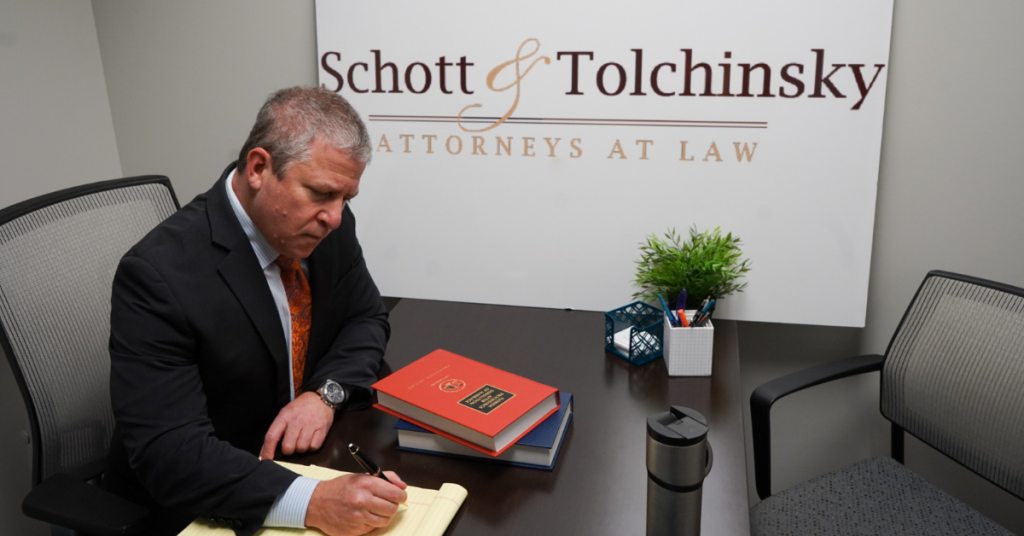
Divorce is not an easy process. Getting through it without the right legal guidance makes a difficult time even harder than it has to be.
Even when you and your spouse are on reasonably good terms, having an experienced Florida divorce lawyer by your side matters. The decisions you make during a divorce, from how assets are divided to how a parenting plan is structured, have consequences that can follow you for years. A lawyer’s job is to make sure those decisions hold up, protect your interests, and give you the best possible outcome given your circumstances.
Larry Schott has practiced family law in Broward County for over 30 years. He brings both the knowledge and the practical experience to help clients navigate even the most complicated divorce cases, while still giving each family the personal attention that a large firm rarely offers.
Call Larry Schott for a free, confidential consultation. We will listen to your situation, explain your rights, and help you understand your options.
Call (954) 880-1302 — Free ConsultationHow a Florida Divorce Lawyer Helps You Through the Process
Florida divorce law is specific, and the rules change. There have been significant statutory reforms in recent years on alimony, time-sharing, and financial disclosure. A lawyer who is current on the law can advise you on what those changes mean for your case and make sure you are not operating on outdated assumptions.
Filing mistakes during a divorce can cost real money. A misstep on a financial affidavit, an incomplete parenting plan, or an agreement that overlooks a retirement account can require going back to court later, which is expensive and stressful. Having a lawyer involved from the beginning is often less costly than trying to fix problems after the fact.
Divorce Process
There are four types of divorce in Florida: simplified, uncontested, contested, and collaborative. Which one applies to your situation depends on whether you and your spouse can agree on the terms, whether children are involved, and how complex your financial picture is. Your lawyer helps you understand which process fits, what to expect at each stage, and how to protect your rights throughout.
For a full overview of the divorce process in Broward County, see our Step-by-Step Guide to Getting a Divorce in Broward County.
Child Support
Florida uses a statutory formula under § 61.30 to calculate child support. The calculation factors in each parent’s net income, the number of children, the time-sharing schedule, and certain expenses including health insurance and childcare costs. While the formula provides a framework, there are circumstances where a deviation from the guidelines is appropriate, and an experienced lawyer knows how to identify and argue those situations.
If you expect to have the children more than your spouse, or if your financial circumstances are complicated by self-employment, variable income, or shared business interests, getting the child support calculation right is critical. It affects both the amount and the long-term enforceability of the order.
Parental Rights and Time-Sharing
Both parents have equal rights in Florida unless a parent poses a demonstrated threat to the child. Florida law uses the terms “time-sharing” and “parental responsibility” rather than custody and visitation, and the court is required to evaluate a detailed list of best-interest factors when creating or approving a parenting plan.
As of July 1, 2023, Florida law now presumes that equal time-sharing is in the best interest of the child. See § 61.13(2)(c)1, Fla. Stat. A parent who believes a different arrangement is appropriate must be prepared to present evidence rebutting that presumption. Your lawyer helps you understand what the court is actually looking for, build the evidence that supports your position, and negotiate a parenting plan that is workable for your family.
For more on this topic, see our full guide: Understanding Child Custody in Florida.
Alimony
Florida’s alimony law changed significantly in 2023 with the passage of SB 1416, effective July 1, 2023. Permanent alimony was eliminated. The types of alimony now available under § 61.08 are bridge-the-gap, rehabilitative, durational, and temporary. Duration caps now apply based on the length of the marriage: for marriages under 10 years, durational alimony cannot exceed 50% of the marriage length; for marriages of 10 to 20 years, the cap is 60%; for marriages over 20 years, the cap is 75%.
These changes apply to new cases filed on or after July 1, 2023. If you have an existing alimony order, the reform may also affect your ability to seek a modification, particularly if you are approaching retirement age. The new law added a provision allowing a paying spouse to seek termination or reduction of alimony upon reaching normal retirement age.
Whether you expect to pay or receive alimony, having a lawyer who understands both the new law and how local judges are applying it is essential. For a full discussion, see our guide: Alimony in Florida: What You Need to Know.
Division of Property
Florida is an equitable distribution state. Courts start with a presumption that marital assets and liabilities are divided equally, but equitable does not always mean 50/50. Numerous factors can justify an unequal distribution, including each spouse’s financial circumstances, contributions during the marriage, intentional dissipation of marital assets, and the needs of any minor children.
Knowing what counts as marital property versus separate property is where many people get tripped up. Assets owned before the marriage, gifts, and inheritances are generally separate, but they can lose that status if they are commingled with marital funds over time. A lawyer identifies these issues early and makes sure the full picture of your marital estate is properly accounted for.
For more detail, see: How to Divide Marital Assets in Florida During a Divorce.
Enforcement
A final divorce judgment is a court order. When a former spouse doesn’t follow it, whether that means missing support payments, violating the parenting plan, or failing to transfer assets as required, you have legal remedies available. Florida courts can hold a non-complying party in contempt, order make-up time-sharing, award attorney’s fees, and in serious cases impose more significant sanctions.
Your divorce lawyer’s job doesn’t end when the final judgment is entered. If compliance becomes an issue, having an attorney who already knows your case is a significant advantage.
Modifications
Circumstances change after a divorce. Income goes up or down, parents relocate, children’s needs evolve, and what made sense in the original agreement may no longer fit reality. Florida law allows modification of alimony, child support, and time-sharing orders when there has been a substantial and material change in circumstances since the last order was entered.
Since July 1, 2023, the modification standard no longer requires that the change be “unanticipated.” That is a meaningful shift that has made modifications somewhat more accessible, though courts still evaluate each request carefully. See: Modifying Alimony in Florida and How to Successfully Modify Child Support in Florida.
Recovery of Attorney’s Fees
One of the questions we hear most often from prospective clients is whether they can afford a divorce lawyer if their spouse controls the finances. The answer, in many cases, is yes, and the law is on your side.
Under § 61.16 of the Florida Statutes, a court can order one spouse to pay a reasonable amount of the other’s attorney’s fees, suit money, and costs in a dissolution of marriage proceeding. The primary considerations are need and ability to pay: if there is a meaningful disparity in the financial resources of the two parties, and the less-resourced spouse genuinely needs assistance to have competent legal representation, a fee award is available. The request can be made at any point in the case, including as a temporary order before the divorce is finalized.
A fee award is not guaranteed, and the wealthier spouse having more money does not automatically mean they will be ordered to pay. But if your situation involves a significant income disparity, a spouse who is running up litigation costs unnecessarily, or conduct that rises to bad faith, a motion for attorney’s fees is worth discussing in your consultation.
Domestic Abuse
If you or your children are being abused by your spouse, a divorce lawyer can help you take the legal steps to protect your family while the dissolution is pending. That includes petitioning the court for an injunction for protection, commonly called a restraining order, which can prohibit your spouse from contacting or coming near you and your children while the case proceeds.
Safety comes first. If you are in immediate danger, call 911. Once you are safe, a family law attorney can help you pursue the legal protections and the divorce process simultaneously. See our guide: How to Get a Restraining Order in Florida.
Other Situations Where Having a Lawyer Matters
Contested vs. Uncontested Divorce
When both spouses agree on every issue, from how property is divided to the parenting plan and child support, it is an uncontested divorce. These cases move faster, cost less, and involve minimal court appearances. Even in an uncontested case, having a lawyer review the settlement agreement before signing protects you from terms that seem reasonable now but create problems later.
When spouses cannot agree on one or more significant issues, the divorce is contested. Contested cases require negotiation, mandatory mediation, and potentially a full trial. The stakes in these cases are high, and the outcome depends heavily on preparation, evidence, and advocacy.
Military Divorce
Divorce involving an active duty service member or veteran comes with its own set of rules. Federal law governs the division of military retirement benefits under the Uniformed Services Former Spouses’ Protection Act. Residency requirements for filing can be complicated by frequent moves and deployments. Child support and time-sharing arrangements need to account for deployment schedules. The Servicemembers Civil Relief Act provides certain protections for active duty members that can affect the timing and procedure of a divorce case.
If you or your spouse serves in the military, working with a divorce attorney who understands both Florida law and the federal statutes that apply to military families is important.
Same-Sex Divorce
Same-sex marriages have been fully recognized under federal and Florida law since the United States Supreme Court’s decision in Obergefell v. Hodges in 2015. Same-sex divorce proceedings in Florida follow the same rules as any other dissolution of marriage, covering equitable distribution, alimony, parenting plans, child support, and all related issues.
Where unique issues sometimes arise is in cases involving children born through assisted reproduction, surrogacy, or adoption, particularly when one parent’s legal relationship to the child was not formally established during the marriage. An attorney experienced in these matters can help clarify parental rights and make sure both parents and children are protected in the divorce.
Call Larry Schott Today for a Free Case Evaluation
If you are considering a divorce in Broward County, or if you have been served with divorce papers and need to understand your rights quickly, the best first step is a conversation. Larry Schott offers free consultations for new clients. He will listen to the specifics of your situation, explain what Florida law says about your circumstances, and help you figure out the right path forward for you and your family.
Call us today or fill out the contact form on our website. We will get back to you promptly.
Call (954) 880-1302 or Contact Us Online150 S. Pine Island Road, Suite 383 | Plantation, Florida 33324
Related Articles:
- What to Know Before You File for Divorce in Florida
- Step-by-Step Guide to Getting a Divorce in Broward County
- Contested Divorce in Florida
- Uncontested Divorce in Florida
- Alimony in Florida: What You Need to Know
- How to Divide Marital Assets in Florida During a Divorce